
10 Essential Indian Spices for a Beginner’s Kitchen
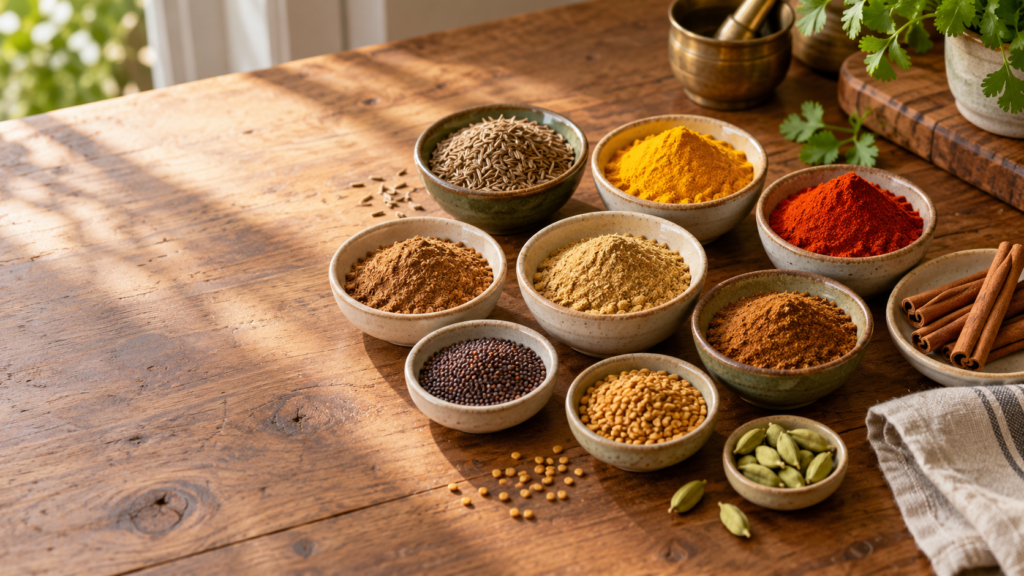
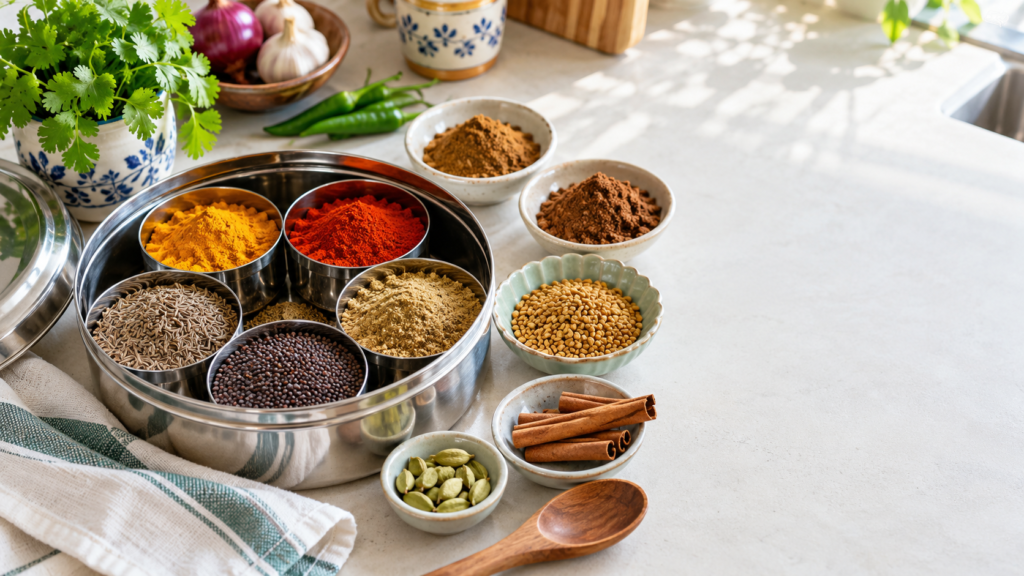
The first time you shop for Indian spices, the choices can feel endless. There are jars of bright powders, bags of seeds, and spice blends with names you may have seen on a menu but never used at home.You don’t need to buy everything. Start with a small set of spices you’ll reach for often. Once you know what each one does, cooking a simple dal, vegetable dish, or chicken curry becomes much easier.
1. Cumin seeds
Cumin seeds have a warm, earthy flavor. Add a small pinch to hot oil at the start of cooking and listen for the gentle sizzle. After a few seconds, you’ll smell the difference. This is an easy way to start a dal, potato dish, or vegetable stir-fry.
Beginner tip: Keep the heat moderate. Seeds can burn quickly if the oil is too hot.
2. Ground cumin
Ground cumin gives you that same earthy flavor without the step of heating whole seeds. Stir it into a tomato-based sauce, a chickpea dish, or a marinade. You can keep both forms in your kitchen: seeds for the start of a dish and ground cumin for seasoning as it cooks.
3. Ground coriander
If cumin brings depth, coriander brings a softer, slightly citrusy note. The two work so well together that many recipes use both. Try them with onions, tomatoes, and chickpeas for a simple weeknight meal.
4. Turmeric
Turmeric gives many dishes their familiar golden color and a subtle earthy taste. A little goes a long way. For a pot of dal or a vegetable curry, start with about ¼ teaspoon and adjust the next time you make it.Be careful when measuring it over a light-colored countertop. Turmeric has a way of leaving its mark.
5. Red chili powder
This is where you control the heat. Chili powders vary, so taste and add gradually, especially when trying a new brand. If you’re cooking for people who prefer mild food, start with a small pinch. You can always add more at the table.
6. Garam masala
Garam masala is a blend of spices rather than a single spice, and every brand has its own balance. It adds a warm, fragrant finish to curries, lentils, and roasted vegetables. Try stirring a little in near the end of cooking, then taste before adding more.
7. Mustard seeds
Mustard seeds are tiny, but they make themselves known in hot oil. They’re especially useful in vegetable dishes and tempering, often called tadka. Add them to the oil, let them pop, then carefully add your other ingredients. A lid nearby is helpful—those little seeds can jump.
8. Fenugreek seeds
Fenugreek seeds have a distinctive, slightly bitter flavor. Use them sparingly; a small pinch can add depth to a dish, while too much can take over. They’re common in some pickles, vegetable preparations, and spice mixes.
9. Green cardamom
Crack open a green cardamom pod and you’ll understand why it belongs in the kitchen. Its sweet, floral aroma works in chai, rice dishes, and desserts. You can simmer whole pods in tea or use a few when cooking fragrant rice.
10. Cinnamon
Cinnamon isn’t only for sweets. A small piece of cinnamon stick adds gentle warmth to rice, meat dishes, and slow-cooked sauces. Put it in while the dish cooks, then remove it before serving.
Where should you start?
If buying all ten at once feels like too much, begin with cumin seeds, ground coriander, turmeric, red chili powder, and garam masala. Make a simple dish a few times and notice what changes when you add a little more of one spice or less of another.That’s the enjoyable part of building a spice collection: the jars stop feeling like a list of ingredients and start feeling like choices you know how to make.